book2sail-celestial navigation

Celestial navigation a personal road map

When you find yourself in the middle of the sea, away from any light pollution, the starry sky on a clear night is a hypnotizing sight. But that mesmerizing sky is not only a pretty picture, or a way the universe tells us how insignificantly small we are. That starry sky may be a lifesaver, a personal road map if you know how to read it.

boat hire marmaris turkey

When people navigate in a space without known landmarks, such as the middle of the ocean, they have no way of knowing where they are by simply looking around. Celestial navigation solves this problem, allowing the navigators to take several sightings of the celestial bodies, and use information from these sightings to determine where they are in relation to what they have seen, helping them to decipher where in the world they are!
book2sail-moon as navigation

Here are some basic methods to find your way with the help of the stars.

There are approximately 6000 stars visible to the naked eye, but only 58 of them, the brightest ones, are listed as the most convenient for navigation.  These 58 stars are part of 38 constellations, and it takes a lot of time to memorize them all. Instead, try to spot 5 of them, Cassiopeia, Crux, Orion, the Big Dipper, and the Little Dipper.

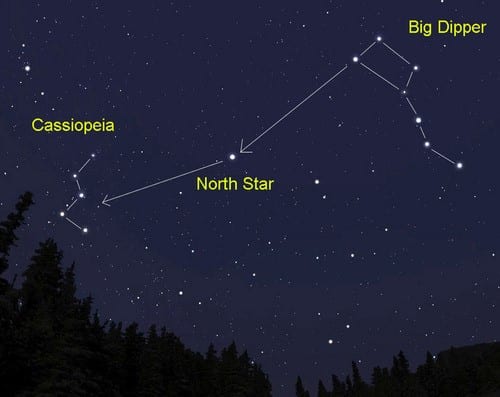
Polaris, also known as the North Star, is considered to be the most important navigational star because it`s always one degree of the north celestial pole. To find it, you will need the Big Dipper, a constellation that consists of seven bright stars forming the shape of a dipper (hence the name). On the other side is the Cassiopeia constellation, whose five stars make a distorted letter W.

And Polaris is in the middle, between the Big Dipper and Cassiopeia. Once you find the North Star, you need to draw a line directly down to the horizon to find true north.

fastest yachts

But in the Southern Hemisphere, you can’t see the Big Dipper or Polaris. Instead, look for the Southern Cross, kite-shaped constellation, also called the Crux. This constellation, along with two nearby stars, will show you the general proximity of true south.

Orion is another well-known constellation, located on the celestial equator and visible from anywhere in the world. Orion`s sword is the brightest feature of this constellation, and its tip points south.

book2sail-great star picture

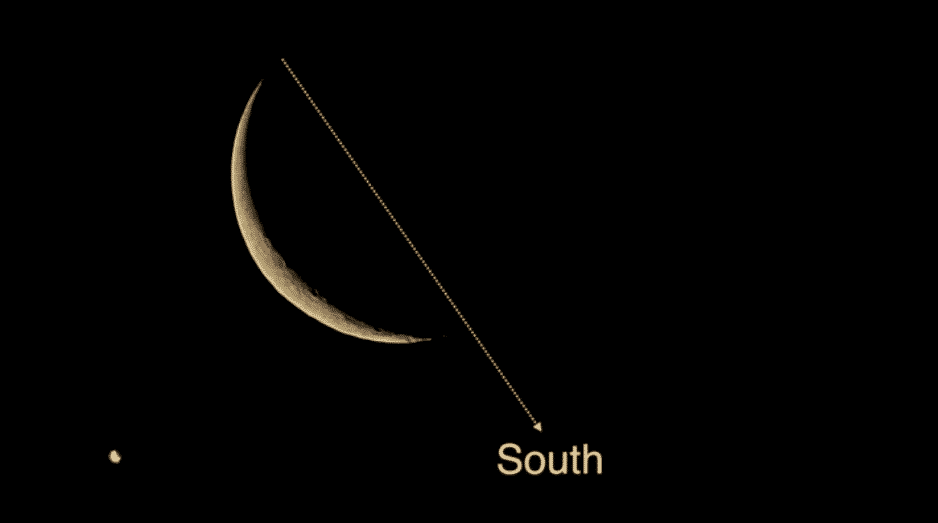
A crescent moon will point you south if you draw an imaginary line from between its tips and follow it to the horizon.

As the Earth rotates, the Sun and the stars travel east to west. Observing how the stars slide, you can easily tell which way you’re facing.

Ancient sailors and voyagers measured the angles between stars and the horizon using their hands to find the latitude (remember Moana and Maui?).

Celestial navigation is art, and complex science, although today is considered more of a hobby, than a tool. In today’s modern world, with GPS gadgets in our pockets, some would say there`s no need to learn these ancient techniques. But technology can malfunction, and it`s always a good idea to have an ace up one`s sleeve.  And, above all, isn’t it fun to discover some of the secrets of this magnificent and mysterious universe? Even if you only use it to impress your friends on a nice, starry night.

Frequently asked questions

  • 1
    What are some of the key preparations I should consider prior to my yacht charter?
    • Travel Documentation

      Always ensure you have some form of acceptable identification, in legible condition and valid.

      Medication

      Double check that both you and other individuals in your group remember to bring important medications that you are currently being prescribed, accounting for the amount of time you will be at sea.

      Money & Additional expenses

      It would be prudent to budget for slightly over what you anticipate spending. Charter related expenses will be made known, however you never know whether you will need something once travelling.

      Research

      Set aside some time look up the areas you intend on visiting, both whilst chartering (as part of your anticipated itinerary) and whilst travelling to the location at which you will begin your charter.

      Supplies

      As with any journey or holiday, ensure you have adequate toiletries, perhaps some favored foods and snacks.

      Clothing

      Bring the types of clothing that will, in your estimation, suit the weather conditions of the location in which you will be chartering. It may be handy to spend some time researching a few sailing blogs and weather forecasts.

      Equipment

      All necessary equipment should be found already aboard (including safety equipment and anything required to properly operate the vessel. Though you may like to bring a few extra mod-cons to ensure you have the best of experiences.

  • 2
    What is the best way to choose the right vessel and charter for me?
    • Choosing the best vessel for you and those joining you on your yacht charter, would be dependent on your personal preference. Though we recommend considering the following points:

      • Your level of experience
      • Where you will be chartering
      • The time of year and associated weather conditions
      • The ages and competence of both yourself and those in your group

      It would be very helpful for you to conduct some basic research pertaining to all of the above, by way of asking those who you know have chartered the type of vessel or been to the location you are considering, before. Yacht charter blogs and other relevant websites that will offer you an understanding of the key factors you should consider.

      And of course, we are more than happy to help you with your decision.

  • 3
    Do I need a licence to charter a yacht?
    • That all depends on where you intend to charter. If you would like to charter a yacht within Europe, the answer would be yes. It is important to remember that the correct licencing and/or documentation for your charter is your responsibility and we would strongly advise you to enquire into the legal prerequisites of your chosen charter region, taking care to note any differences if you are to cross maritime boarders.

      Regarding Europe, you will require an International Certificate of Competence, also known as the ICC.

  • 4
    What is an APA?
    • As a rule of thumb, the fee you pay for your charter, includes the rental of the vessel and the necessary crew to operate it, all other expenses associated with the charter are separate and are financed by the APA, which stands for the Advance provisioning allowance.

      The APA generally amounts to 30% of the total charter fee, though this may vary depending on the vessel.

      Dockage fees, fuel, communications and food & beverages will all be financed by the APA. Any remaining money from the APA at the end of the charter, will be returned to you.

  • 5
    What happens if the owner/captain does not show up, or is late?
    • All boat owners are bound to have someone meeting charterers on the day of charter. It is important that you as a charterer notify us if there is something wrong with your charter. For more information read the charterer’s policy.

Latest news

Charter a yacht with Book2Sail

Book2Sail makes you feel that when it comes to chartering a boat, there is no limitation. You can choose any form of boat at any time and anywhere (catamaran, sailboat, motorboat, jet ski). Whether you’re sailing in August with a catamaran to explore the Dalmatian coastline or spending Easter holidays in the French Riviera, you will find your dream boat.

Our team of chartering specialists are ready to assist you to make your chartering experience as easy as possible. We have different itineraries to cater for any type of activity you choose to do, once you are ashore.

Get in touch now and Book2Sail today.