book2sail-rope 1149730 960 720

Knots that every sailor must know

Surely no self-respecting sailor would tie his boat with the first rope that fell into his hands or with the first knot that went through his head, if he had, the it wouldn’t be surprising to soon find that boat a drift somewhere.

boat hire marmaris turkey

It is well known that within the nautical world, each knot must be made according to the different uses and different tasks that are going to be undertaken. In this article, we have decided to show you a couple of sailor knots so you can learn how to make them. We encourage you to leave us your comments!

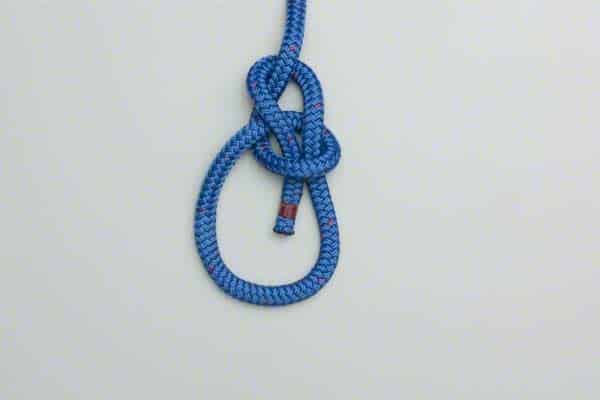
BOWLINE

The bowline is one of the most commonly used nautical knots and absolutely every sailor should know it. It ties quickly and unties even more easily. An extremely tight and secure knot that will not jam and is used in all cases where a permanent or easy-to-carry loop is required. The only drawback of this node is that it is practically impossible to untie it when the rope is tightened. In that case, you can leave a stub at the open end, the pulling of which can easily loosen this node.

Bowline Knot Tying Instructions:
book2sail-BOWLINE

–    Lay the rope across your left hand with the free end hanging down. Form a small loop in the line in your hand.

–    Bring the free end up to and pass through the eye from the underside (the rabbit comes out of the hole).

fastest yachts

–    Wrap the line around the standing line and back down through the loop (around the tree and back down the hole).

–    Tighten the knot by pulling on free end while holding the standing line

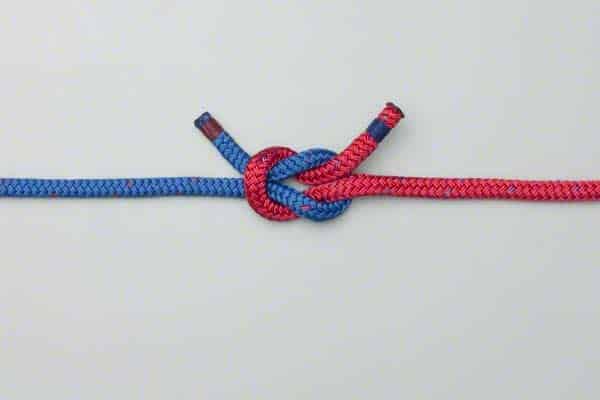
SQUARE KNOT (REEF KNOT)

The most common use of this knot is to merge two ropes with the same or similar diameter, that need to be untied after that. Very solid and reliable knot but, if exposed to heavy load, it is difficult to untie it. In that case, it is useful to leave a spat at one end.

Square Knot Tying Instructions:
book2sail-SQUARE KNOT REEF KNOT
  • Tie two over hand knots. First, right over left and twist. Then left over right and twist.
  • Make sure both parts of the rope exit the knot together!

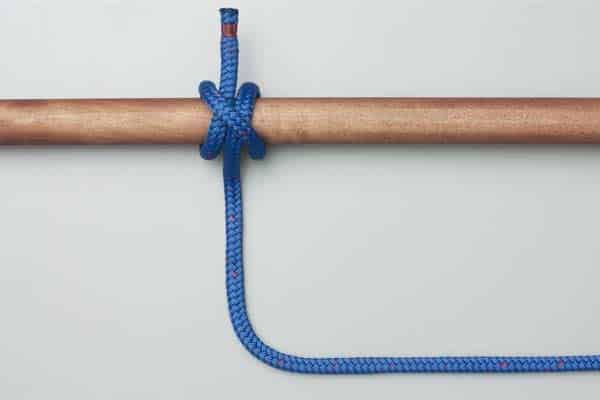
CLOVE HITCH

Another knot that every sailor must know. The most common use is to fast bind to the beam or to attach the fender to the fence. Its advantages are that is extremely quick and easy to bind, it is very easy to extend and shorten and easy to untie. Its disadvantage is that it will slip if not under tension and will slip when tied with nylon rope. Always remember this disadvantage and when you think that the end is loosened, secure it with a plain knot.

Clove Hitch Knot Tying Instructions:
book2sail-clove hitch

–    Wrap the free end of a rope around a post.

–    Crossover itself and around the post again.

–    Slip working end under the last wrap.

–    Pull tight.

ANCHOR BEND

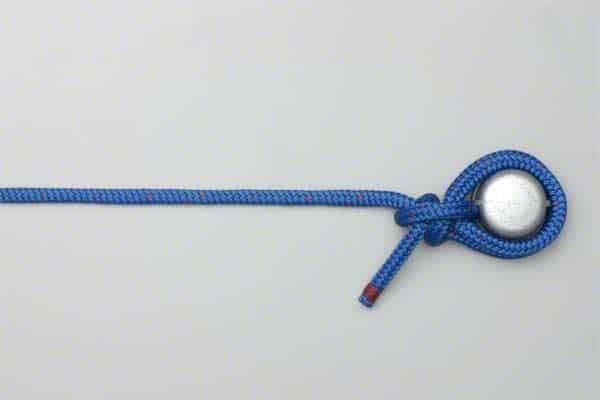
The anchor bend or anchor hitch is also extremely secure and stronger than the bowline, and is used when it is necessary to have a permanent connection. For this reason, it is most commonly used to a ring or similar termination, and to tie anchors to a buoy.

Anchor Bend Knot Tying Instructions:
book2sail-anchor bend
  • Make two turns around the shackle, leaving turns open.
  • Pass free end behind the standing line and feed the free end through the first turns and pull tight.
  • Now tie a half hitch around the standing line and pull tight.
  • Seize the free end or tie the knot with a long tag end and tie a backup knot such as one half of a Double Fisherman with the tag end around the standing part.

FIGURE 8 KNOT

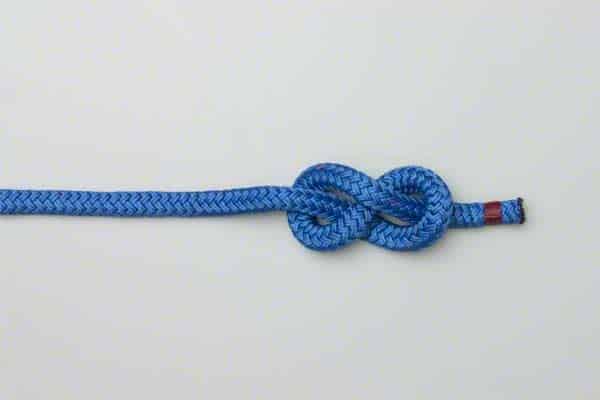
The Figure 8 knot is a stopper knot, and one of the top most important for sailors. It is used to put a stopper at the end of a rope or line to stop it from running away through a pulley, block or fender eye. This knot can always be untied, even after a load. It is simple to make and has the shape of the number eight as its name suggests.

Figure 8 Knot Tying Instructions:
book2sail-figure 8 knot
  • Tie a single eight in the rope two feet from its end. Pass the free end through any tie-in point if desired.
  • Retrace the original eight with the free end leaving a loop at the bottom of the desired size.
  • Pull all four strands of rope to cinch down the knot.
  • Add a backup knot for extra security.

Frequently asked questions

  • 1
    What are some of the key preparations I should consider prior to my yacht charter?
    • Travel Documentation

      Always ensure you have some form of acceptable identification, in legible condition and valid.

      Medication

      Double check that both you and other individuals in your group remember to bring important medications that you are currently being prescribed, accounting for the amount of time you will be at sea.

      Money & Additional expenses

      It would be prudent to budget for slightly over what you anticipate spending. Charter related expenses will be made known, however you never know whether you will need something once travelling.

      Research

      Set aside some time look up the areas you intend on visiting, both whilst chartering (as part of your anticipated itinerary) and whilst travelling to the location at which you will begin your charter.

      Supplies

      As with any journey or holiday, ensure you have adequate toiletries, perhaps some favored foods and snacks.

      Clothing

      Bring the types of clothing that will, in your estimation, suit the weather conditions of the location in which you will be chartering. It may be handy to spend some time researching a few sailing blogs and weather forecasts.

      Equipment

      All necessary equipment should be found already aboard (including safety equipment and anything required to properly operate the vessel. Though you may like to bring a few extra mod-cons to ensure you have the best of experiences.

  • 2
    What is the best way to choose the right vessel and charter for me?
    • Choosing the best vessel for you and those joining you on your yacht charter, would be dependent on your personal preference. Though we recommend considering the following points:

      • Your level of experience
      • Where you will be chartering
      • The time of year and associated weather conditions
      • The ages and competence of both yourself and those in your group

      It would be very helpful for you to conduct some basic research pertaining to all of the above, by way of asking those who you know have chartered the type of vessel or been to the location you are considering, before. Yacht charter blogs and other relevant websites that will offer you an understanding of the key factors you should consider.

      And of course, we are more than happy to help you with your decision.

  • 3
    Do I need a licence to charter a yacht?
    • That all depends on where you intend to charter. If you would like to charter a yacht within Europe, the answer would be yes. It is important to remember that the correct licencing and/or documentation for your charter is your responsibility and we would strongly advise you to enquire into the legal prerequisites of your chosen charter region, taking care to note any differences if you are to cross maritime boarders.

      Regarding Europe, you will require an International Certificate of Competence, also known as the ICC.

  • 4
    What is an APA?
    • As a rule of thumb, the fee you pay for your charter, includes the rental of the vessel and the necessary crew to operate it, all other expenses associated with the charter are separate and are financed by the APA, which stands for the Advance provisioning allowance.

      The APA generally amounts to 30% of the total charter fee, though this may vary depending on the vessel.

      Dockage fees, fuel, communications and food & beverages will all be financed by the APA. Any remaining money from the APA at the end of the charter, will be returned to you.

  • 5
    What happens if the owner/captain does not show up, or is late?
    • All boat owners are bound to have someone meeting charterers on the day of charter. It is important that you as a charterer notify us if there is something wrong with your charter. For more information read the charterer’s policy.

Latest news

Charter a yacht with Book2Sail

Book2Sail makes you feel that when it comes to chartering a boat, there is no limitation. You can choose any form of boat at any time and anywhere (catamaran, sailboat, motorboat, jet ski). Whether you’re sailing in August with a catamaran to explore the Dalmatian coastline or spending Easter holidays in the French Riviera, you will find your dream boat.

Our team of chartering specialists are ready to assist you to make your chartering experience as easy as possible. We have different itineraries to cater for any type of activity you choose to do, once you are ashore.

Get in touch now and Book2Sail today.