book2sail-catamaran in strom and rough sea 1170x659 1

Are Catamarans Sable in Rough Seas?

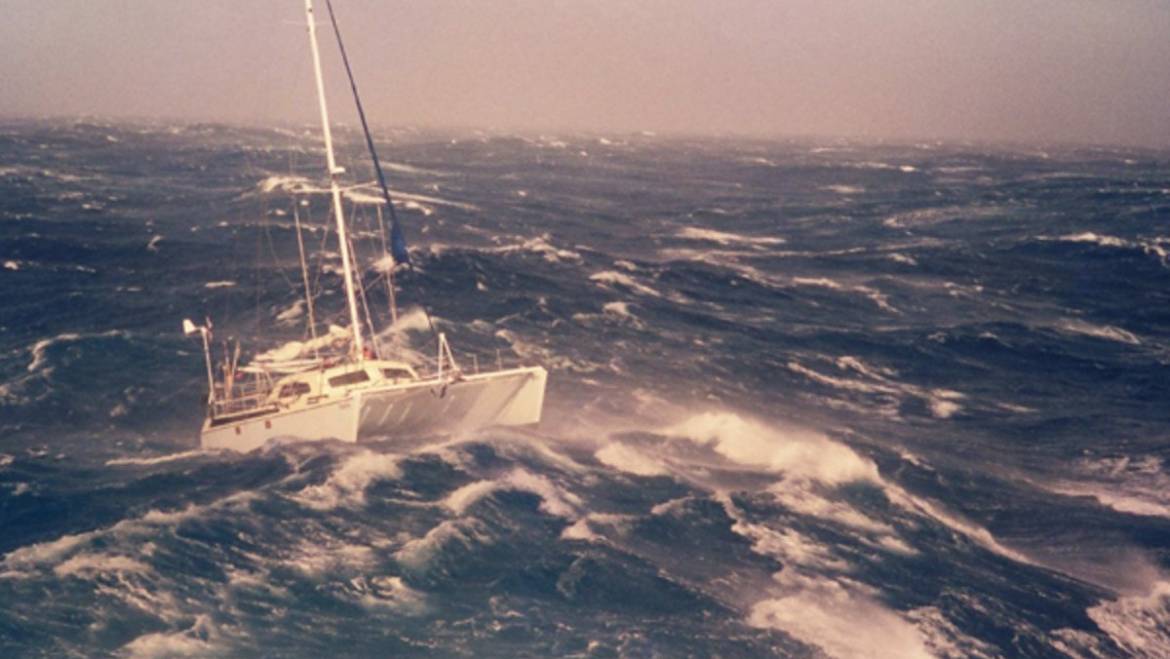
Sailing a catamaran in rough seas is not an easy task. Actually, sailing any boat in big waves is not easy. It requires a lot of knowledge, determination of the crew and stability of the boat. So, are catamarans safe for ocean crossing when you have to sail in heavy seas?

boat hire marmaris turkey

What Is It That You Need to Know?

There are a few things you need to know when it comes to power catamaran in rough seas:

1. Drogue slows down, Sea Anchor Moors You With Minimal Drift

When sailing catamaran in heavy seas, you need yo know what you need to use depending on the sea room. If drogue will slow your boat down, the sea anchor will moor you to the middle of the sea with minimal drift. However, at the end of the day, what you are looking for is control. Using whichever means of slowing the boat to be in sync with the seas will create much less stress on boat fittings in comparison with sea anchors, because that way, you would be running with the wind and the seas.

2. When Running, A Cat Should Be Taken Downwind

It is more beneficial to run downwind at a slight angle when cruising a catamaran in heavy seas because this will increase the effective length of the cat by presenting its diagonal distance. This distance is longer than the overall height of the boat, to following seas. Moreover, this diagonal distance is the most important aspect of multihull stability. By running at a slight angle, the bows will bury less, and the risk of pitchpoling is minimized.

3. Run Before Seas and Wind With Minimal Sail

fastest yachts

This is the preferred tactic to many sailors when it comes to calming down catamaran in big waves. You may not have the need to touch the helm, because the autopilot will do its job without any mistake. You should keep your cat’s twin non-yawing, always-vertical rudder and keels will keep the boat on track, making it much easier for the autopilot to cope with the seas.

Catamaran VS Monohull in Rough Seas

1. Deploying Sea Anchor

In order to keep chafe to a minimum, the most important aspect in deploying a sea anchor is the ability to control the angle, otherwise, the vessel will have the wind and prevailing seas without putting too much strain on fittings. The wide beam of a catamaran when in rough seas will give the boat an advantage over monohull, since the bigger bridle angle will reduce strain and improve attitude leverage, which facilitates boat rotation in respect to the sea anchor. However, an important note is that sea anchors should be used as a very last resort on a catamaran.

2. Seaworthiness

When it comes to seaworthiness, it is just a combination of seamanship, construction, and boat design. If monohulls often can fend for herself in a storm, a multihull requires more attention. Higher speeds and loads will demand a vigilant crew who need to dial in the cat in order to find the safest and most comfortable setup. Luckily, fast cats have an edge in speed over monohulls with equal length and can avoid bad conditions by smart weather monitoring and routing.

These boats are stiffer than keelboats thanks to their extensive righting moment, which is many times that of a monohull. A well-designed cruising catamaran is unsinkable, sheltering the crew in a catastrophic event, whereas the monohull would disappear from sight, forcing the crew into a miniature rubber raft.

Frequently asked questions

  • 1
    What are some of the key preparations I should consider prior to my yacht charter?
    • Travel Documentation

      Always ensure you have some form of acceptable identification, in legible condition and valid.

      Medication

      Double check that both you and other individuals in your group remember to bring important medications that you are currently being prescribed, accounting for the amount of time you will be at sea.

      Money & Additional expenses

      It would be prudent to budget for slightly over what you anticipate spending. Charter related expenses will be made known, however you never know whether you will need something once travelling.

      Research

      Set aside some time look up the areas you intend on visiting, both whilst chartering (as part of your anticipated itinerary) and whilst travelling to the location at which you will begin your charter.

      Supplies

      As with any journey or holiday, ensure you have adequate toiletries, perhaps some favored foods and snacks.

      Clothing

      Bring the types of clothing that will, in your estimation, suit the weather conditions of the location in which you will be chartering. It may be handy to spend some time researching a few sailing blogs and weather forecasts.

      Equipment

      All necessary equipment should be found already aboard (including safety equipment and anything required to properly operate the vessel. Though you may like to bring a few extra mod-cons to ensure you have the best of experiences.

  • 2
    What is the best way to choose the right vessel and charter for me?
    • Choosing the best vessel for you and those joining you on your yacht charter, would be dependent on your personal preference. Though we recommend considering the following points:

      • Your level of experience
      • Where you will be chartering
      • The time of year and associated weather conditions
      • The ages and competence of both yourself and those in your group

      It would be very helpful for you to conduct some basic research pertaining to all of the above, by way of asking those who you know have chartered the type of vessel or been to the location you are considering, before. Yacht charter blogs and other relevant websites that will offer you an understanding of the key factors you should consider.

      And of course, we are more than happy to help you with your decision.

  • 3
    Do I need a licence to charter a yacht?
    • That all depends on where you intend to charter. If you would like to charter a yacht within Europe, the answer would be yes. It is important to remember that the correct licencing and/or documentation for your charter is your responsibility and we would strongly advise you to enquire into the legal prerequisites of your chosen charter region, taking care to note any differences if you are to cross maritime boarders.

      Regarding Europe, you will require an International Certificate of Competence, also known as the ICC.

  • 4
    What is an APA?
    • As a rule of thumb, the fee you pay for your charter, includes the rental of the vessel and the necessary crew to operate it, all other expenses associated with the charter are separate and are financed by the APA, which stands for the Advance provisioning allowance.

      The APA generally amounts to 30% of the total charter fee, though this may vary depending on the vessel.

      Dockage fees, fuel, communications and food & beverages will all be financed by the APA. Any remaining money from the APA at the end of the charter, will be returned to you.

  • 5
    What happens if the owner/captain does not show up, or is late?
    • All boat owners are bound to have someone meeting charterers on the day of charter. It is important that you as a charterer notify us if there is something wrong with your charter. For more information read the charterer’s policy.

Latest news

Charter a yacht with Book2Sail

Book2Sail makes you feel that when it comes to chartering a boat, there is no limitation. You can choose any form of boat at any time and anywhere (catamaran, sailboat, motorboat, jet ski). Whether you’re sailing in August with a catamaran to explore the Dalmatian coastline or spending Easter holidays in the French Riviera, you will find your dream boat.

Our team of chartering specialists are ready to assist you to make your chartering experience as easy as possible. We have different itineraries to cater for any type of activity you choose to do, once you are ashore.

Get in touch now and Book2Sail today.